Wednesday, July 20, 2011

A Spokane Trolley?

Transit officials are lined up behind an electric trolley. Now it's City Hall's turn.

Heidi Groover
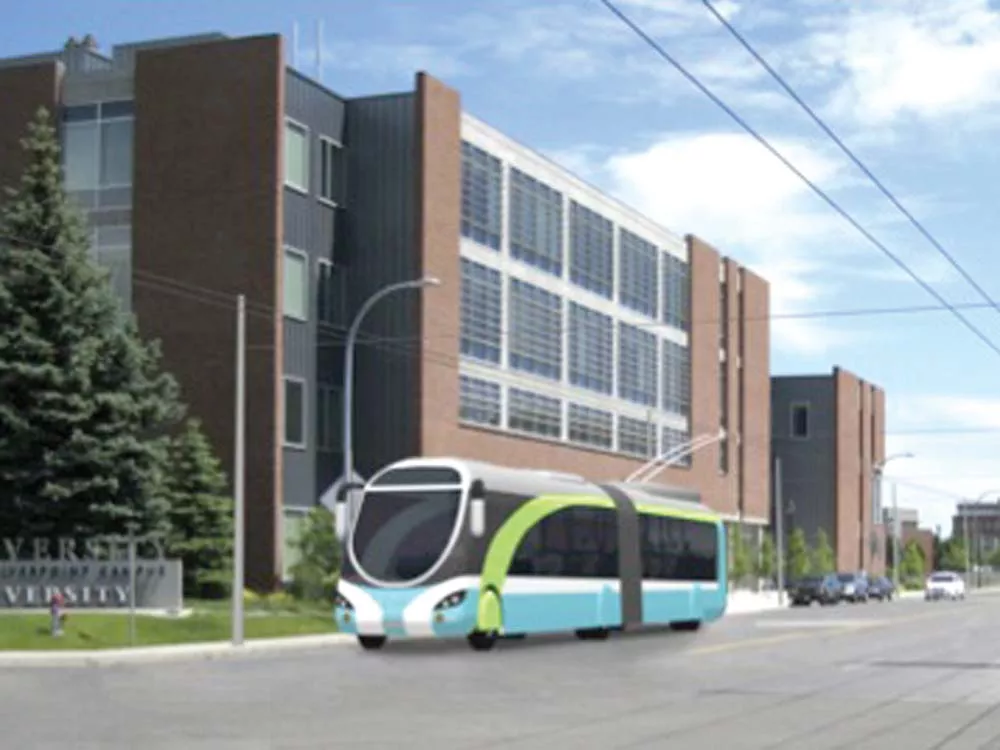
A computer model of what Spokane's trolley could look like

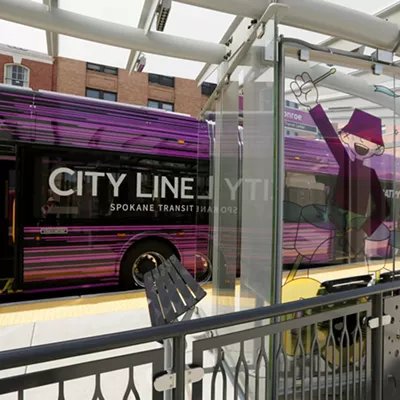
The Spokane Transit Authority helped design its final route and it’s part of the downtown plan, but an electric trolley in Spokane is still years from reality.

Still, this Monday the Spokane City Council will debate — and vote on — whether an electric trolley bus is the best option for a downtown commuter line.

City and transportation officials initially compared three systems for a trolley from Browne’s Addition to Gonzaga: 1. An enhanced bus system (more diesel or hybrid buses on more routes). 2. An electric trolley bus (runs on overhead electrical cables, but uses diesel or battery power off the cables). 3. A streetcar system (a tram that gets power from overhead electrical cables, but runs on tracks — think Seattle and Portland).

Officials ultimately favored the electric trolley bus — permanent and efficient, but not the most expensive of the three — and now want the City Council to get onboard, says Amber Waldref, a council member who also sits on the STA board of directors.

Proponents hope the trolley would encourage more development downtown. But Chris Cargill, of the nonprofit Washington Policy Center, says there’s no clear evidence trolleys bring growth, but it’s clear they’re expensive. Planners say this one will cost about $36 million.

Considering multiple options gives Spokane a better shot at getting federal money for a trolley, Waldref says, but it’s still just one of many downtown dreams.

“I want it to move forward, but I want to be realistic about it,” she says. “We only have so much money, time and energy.”

The Spokane City Council will meet Monday at 6 pm in City Hall’s Council Chambers, 808 W. Spokane Falls Blvd.


Also in News

Local Limits

What stands between your shopping cart and local farmers

Heidi Groover |
Wednesday, May 15,2013

Feds Come Knocking

The feds scare a medical pot store from opening up; plus, how to help those displaced by last week’s fire

Heidi Groover, Deanna Pan |
Wednesday, May 15,2013

Rats Giggle Too

And that's a bigger deal than you might think

Daniel Walters |
Wednesday, May 15,2013

There's Not Enough Poverty In Kids' Books

A Whitworth researcher studies how picture books reflect the reality of American poverty

Deanna Pan |
Wednesday, May 15,2013

We Can Turn DNA into Music

An Eastern Washington University professor creates audio interpretations of living things

Seth Sommerfeld |
Wednesday, May 15,2013

Also By Heidi Groover

Trouble Coming Home

A new court program helps veterans learn to live again.

Heidi Groover |
Wednesday, August 10,2011
Scholastic Fantastic

Fix Games, Fix the Gender Gap

And four other lessons we learned from local schools this year

Heidi Groover |
Wednesday, June 6,2012

Farming Data

How rural Washington is the brain of the world.

Heidi Groover |
Tuesday, November 22,2011


Another hair-brained scheme by the rapid transit addicts. The "trolley" won´t bring business downtown or improve business downtown. That´s a ridiculous idea with no merit or evidence to support. What´s the connection between Brown´s Addition and Gonzaga? There doesn´t seem to be any relevance to those two points.
We can´t compare to metropolitan areas like Portland or Seattle and it´s just plain stupid to do so!
If the downtown area of Spokane wants to improve business downtown then eliminate the one-way system and buy out the parking lots and run them by the city, if that´s possible. Both of those have been a bane to downtown for decades and the city leaders are too blind to realize it.
Frankly, I believe the "rapid" transit people would put any line of any kind anywhere just to get their foot in the door, regardless of the will of the voters. Jul 20, 2011 | Reply to this comment


David,
You make the most ridiculous statements. Amazing! Of course we are not Seattle or Portland though I do think we are more closely following Portland in quality of life decisions. But in both of those cities cases, density with less sprawl
and walkable cities with much less public taxes subsidizing sprawl occurred when fixed transit gave residents confidence that the system would be there.
We have a great urban core anchored by relatively dense employers. We have a fabulous growing medical complex with real opportunity for a medical school. Health care is well over 20% of our employment and we serve 2.1 million people in 41 counties surrounding Spokane in health services.
Moving the students and employees without relying on everyone owning a car is smart planning. Encouraging developers like Kendle Yards to build without two car parks per unit means less public cost for roads, more affordable housing and density that attracts enterprise building a reliable tax base.
I really congratulate the citizens who have put time in on this important issue & the electeds who will need to advance it.
Next time you travel to Portland or Seattle, look at their tax base and opportunity for kids to find jobs.
Oh, and I know what you are about to say, I am just a developer who over his career studied urban planning, chaired our chamber, fought for urban affordable housing, built tens of millions of dollars of urban projects, so I don´t have a clue... Jul 21, 2011 | Reply to this comment


DDC
With all due respect, when factoring annual ridership and fuel consumption, the average passenger on a STA bus emits 7 times the carbon footprint of a single individual driving a 8 cylinder luxury car with no passengers and profitability is completely out the window as NYC is the only mass transit that comes close to breaking even.
Spokane touts its "payroll deduction" economy, where the largest employers (government, medical, education) are simply deductions on your paycheck. This would seem to be good, solid economic strategy but these institutions (government/education) are under severe financial stress and cash flows are trending negative in the foreseeable future.
Spokane needs to look at a new strategy. Caterpillar is a start, but I´m very curious as to what concessions were given to seal that commitment.
As soon as our civic pillars, leaders and citizens treat every business with that vigor and attention (as Caterpillar), we will have a great place to live and a dynamic, diversified economy that increases it´s business with the global economy and lessens "feeding on it´s young".
Having respect for your contribution to our community Mr. Barbieri, the financially wasteful and environmentally inefficient programs that are thrust upon the taxpayers to benefit a single economic sector, are part of the problems that have led us to the financial woes so prevalent in the headlines. If the Medical community and WSU/Gonzaga want a trolly...let them finance and maintain it. They surely have the money to do so and it gives the taxpayer a much needed and deserved break. Jul 23, 2011 | Reply to this comment


DDC asserts: "the average passenger on a STA bus emits 7 times the carbon footprint of a single individual driving a 8 cylinder luxury car"

That would be a fascinating observation, if it were supported by fact. Where did you get such a number? Without a verifiable reference, it bears no weight. Care to share it?

A counterexample is in order. It is a daily occurrence for the commuter route from Liberty Lake to Spokane to have 100 riders on it. If that particular bus gets 4 miles per gallon (which is the low end of the scale for buses, and the new hybrid buses are rated at 6 miles per gallon), it´s getting the equivalent of 400 miles per gallon compared to a single occupancy luxury car. Even if it were one of those old 1986 articulated buses they retired a few years back, they´d be getting the equivalent of 250 miles per gallon. Let´s observe that the return trip is probably close to empty, say only 20 people. In the worst case scenario, that would mean that the round trip would be getting the equivalent of 150 miles per gallon.

Which dealership sells those cars, DDC?

(And, please, name one transportation system which pays for itself. There are none, with the possible exception of walking. And that is only true if you never leave your home.)

And, David: my observation has been that you´ve always shown yourself to be a staunch opponent of cost-effective transportation for those who provide labor for our region´s employers, despite all the evidence that people have attempted to provide to you over the years. So, though I have no confidence that you´ll absorb any benefit from this attempt, I´ll try anyway for the benefit of those who would otherwise be fooled by your misdirection.

davidbray asks, "What´s the connection between Brown´s Addition and Gonzaga? There doesn´t seem to be any relevance to those two points."

It´s linking an area of affordable housing to downtown, WSU and EWU´s Riverpoint Campus, and Gonzaga University, places where students spend their days. Students are such reliable bus riders that they have prepayment systems set up to enhance STA´s revenue flow. In addition, the route between Browne´s Addition and downtown is one of the highest performing routes in the region, at one point actually producing more revenue than expended in its operation. Comparing this route to the system as a whole is inappropriate because it´s communities such as these which subsidize the rest of the system.

Avoiding the fate of Portland or Seattle--where incomes are so much higher, in part, because they are willing to make public investments which can be leveraged by private sector investment--seems to be inevitable with a community unwilling to believe enough in themselves to actually invest in their own home town. Thank you, Don, for working hard to move our city forward despite the work of those people who would hold us back. It´s people like you who will help us make a positive future for our children and our children´s children. Jul 27, 2011 | Reply to this comment


Close
Close
Close